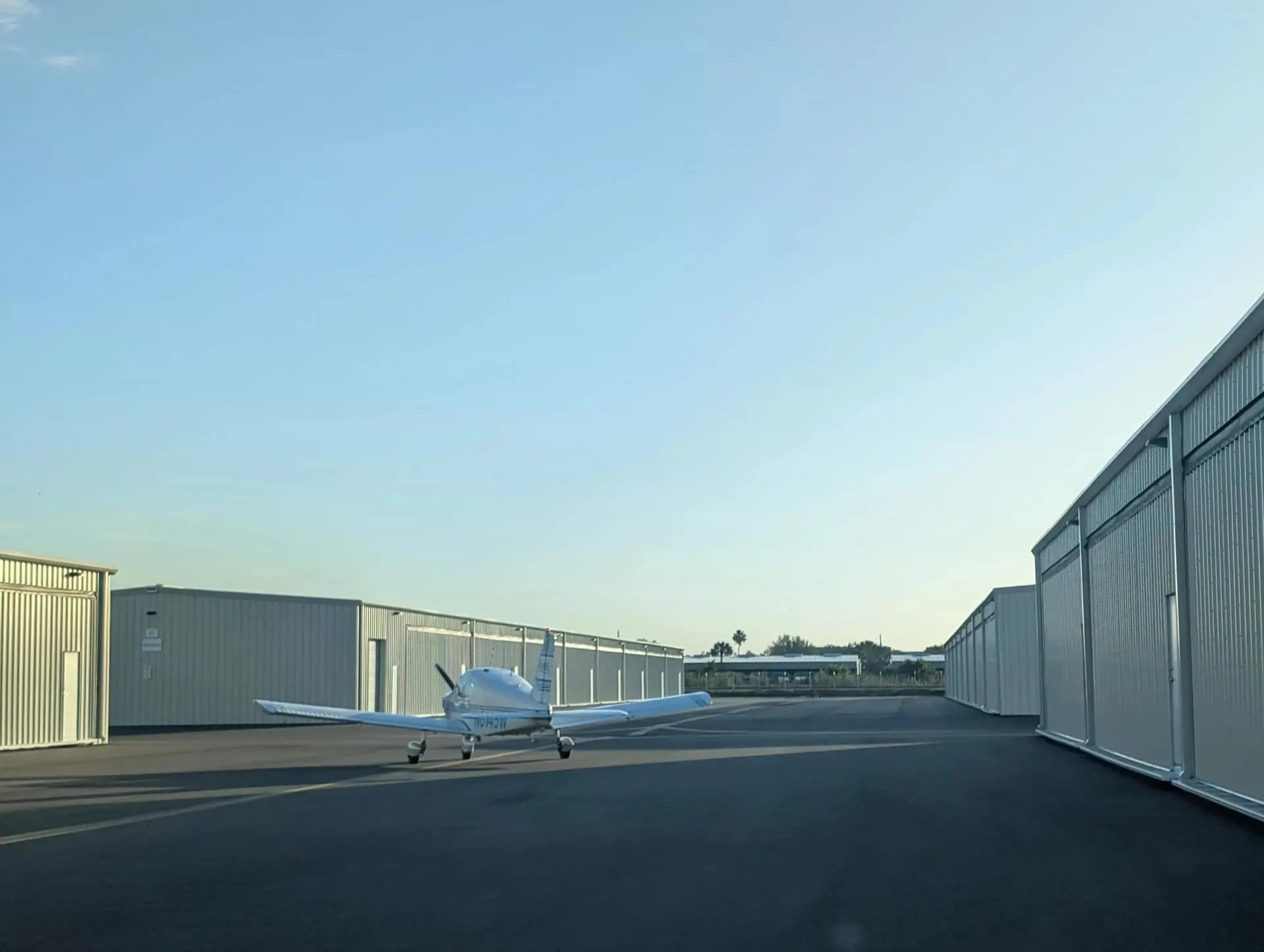
Risk management and decision-making, in plain English
Almost nothing that goes wrong in a small airplane is a surprise. It is a chain of small accepted risks, and aeronautical decision-making is simply the habit of noticing the chain while you can still break it.
By Cristian Duran
If you read enough accident reports you stop seeing accidents. You start seeing chains.
Nobody wakes up and flies into weather they knew was lethal. What happens is that somebody was a little tired, and the airplane was a little unfamiliar, and the forecast was a little worse than they hoped, and they had told their family they would be home — and each of those on its own would have been survivable.
Aeronautical decision-making is not a personality trait and it is not courage. It is a set of habits for noticing the chain early enough to break it. It is teachable, which is the good news, and it is the part of your training I care about most.
PAVE: where the risk lives
Before a flight, run four buckets.
- P — Pilot. Am I fit, current, and competent for this flight? That is the IMSAFE check, plus a straight answer about recency. Ninety days since your last landing is a different pilot than three days.
- A — Aircraft. Is it airworthy, is it fuelled, do I know its performance in today’s conditions, and is it the right airplane for this trip?
- V — enVironment. Weather, terrain, airspace, daylight, and the airports at both ends. In Florida, read that as: weather, and specifically what the weather is going to be doing at three o’clock.
- E — External pressures. The one that kills people. Somebody waiting, a hotel booked, a lesson you already paid for, a friend you promised a ride.
Nothing on that list is automatically a stop. What matters is that you counted them. Three yellows in three different buckets is a red, and a pilot who has not named them will not notice they have three.
The 3P loop: what to do in the air
In flight, decisions come at you continuously, and the model I teach is deliberately simple enough to actually run under load:
Perceive — what is going on? The cloud base ahead is lower than it was.
Process — what does it mean for me? If it keeps dropping I lose my VFR options in about ten minutes.
Perform — do something. Turn around now, while the turn is free.
Then start again. It is a loop, not a decision. The single most useful thing about it is that “Perform” includes do nothing on purpose — but you have to have chosen that, out loud, rather than drifted into it.
The five hazardous attitudes
The FAA names five, and every one of them is a sentence you will one day hear in your own head. Learn to recognise your own voice saying them:
| The attitude | Sounds like | The antidote |
|---|---|---|
| Anti-authority | ”That rule is stupid.” | Follow the rules. They are usually right. |
| Impulsivity | ”Do something, quickly!” | Not so fast. Think first. |
| Invulnerability | ”It won’t happen to me.” | It could happen to me. |
| Macho | ”I can do it.” | Taking chances is foolish. |
| Resignation | ”What’s the use.” | I’m not helpless. I can make a difference. |
I am not asking you to memorise a table for the written exam, although you will be asked about it. I am asking you to notice which of these five is yours. Everybody has one. Mine is the fourth, and knowing that is why I fly the way I do.
The personal minimums sheet
The practical output of all this is one piece of paper you write on the ground, when nothing is at stake, and then obey later when something is.
Write down your own numbers: lowest ceiling, lowest visibility, strongest crosswind, latest departure time, minimum fuel on landing. Make them stricter than the regulations, because the regulations are written for the whole country and you are one pilot with a specific amount of experience.
Then the decision at the airport stops being a judgment call you make while tired and under pressure. It becomes arithmetic: is the crosswind above my number or below it? That is the entire trick. You are not trying to be brave in the moment. You are trying to make the moment not require bravery.
Why I teach this from lesson one
Because a good pilot is not somebody with beautiful landings. Plenty of pilots with beautiful landings are dead.
A good pilot is somebody who is boring in exactly the right places, who cancels when they should, and whose worst days are uneventful. That is what I mean when I say we train pilots here rather than test-takers.
Want a straight answer on whether now is your season? Speak to me first — it is a free video call and there is nothing to sign.