How do I become a pilot if…? The questions people are nervous to ask
You can become a pilot if you wear glasses, if you are 30, 40 or 60, if you have no college degree, and often if you have ADHD or are colorblind. Most of what people fear is either not a rule at all or a matter of paperwork. Here are straight answers, and what to do before you fill in the FAA medical form.
By Cristian Duran
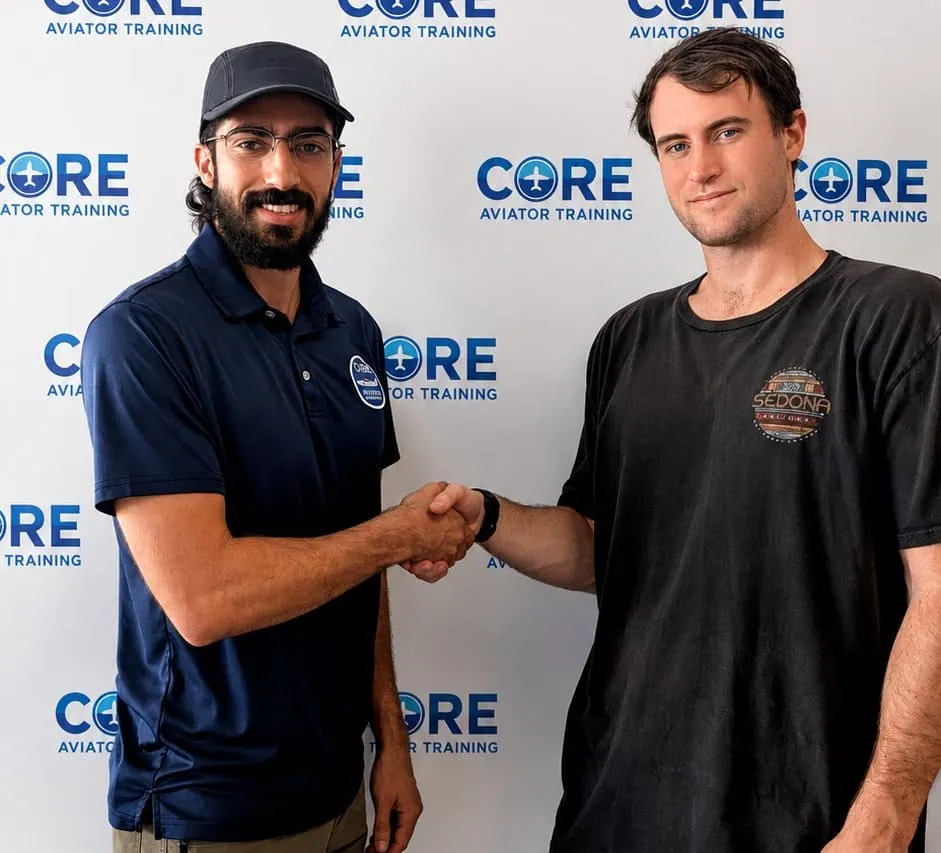
When people call to ask how to become a pilot, the question they actually want answered usually comes a minute later, and quieter. Can I do it if I wear glasses? If I’m 42? If I was diagnosed with ADHD as a kid?
Those questions stop more people than cost ever does, and most of them have better answers than people expect. This page goes through the ones I hear most, in plain language. The step-by-step path itself — first lesson to checkride — is in how to become a pilot.
A note before we start: I am a flight instructor, not a doctor. Anything medical below is general information about how the FAA process works. Your answer comes from an FAA Aviation Medical Examiner (AME), and the most useful thing on this page is the section on when to talk to one.
The short answers
| ”Can I become a pilot if…” | Short answer |
|---|---|
| I wear glasses or contacts | Yes |
| I’ve had laser eye surgery | Yes, once healed |
| I’m colorblind | Often yes, sometimes with a night-flying limit |
| I have ADHD | Often yes, with extra paperwork |
| I take antidepressants | Sometimes, through a specific FAA process |
| I’m 30, 40, 50 or older | Yes, there is no upper age limit to learn |
| I’m a teenager | Yes, start now; solo at 16 |
| I have no college degree | Yes, no degree is required |
| I’m bad at math | Yes, it is arithmetic, and the tools help |
| I’m nervous in small planes | Usually yes, it fades fast |
| I’m tall or heavy | Usually yes, tell us first so we can plan |
| I can’t afford it all up front | Yes, pay as you fly |
Now the detail.
…I wear glasses?
Yes. This is the most common worry and the simplest answer. For a third-class medical — the one private pilots need — the FAA standard is 20/40 distance vision in each eye, with or without correction. Glasses and contacts are completely normal. Your medical will simply say you must wear them while flying, and you will carry a spare pair.
Laser eye surgery is generally fine once your eyes have healed. Bring your surgeon’s records to the AME.
…I’m colorblind?
Often, yes. The FAA requires you to perceive the colors needed for safe flight — light signals from the tower, the coloured lights on other aircraft, chart symbols. If you do not pass the color test at the AME’s office, there are alternative FAA-accepted tests and, if needed, an operational test with the FAA itself.
The worst realistic outcome for many pilots is a limitation on the certificate: not valid for night flying or by color signal control. That still lets you learn, solo and fly in daylight. Page Field is a towered airport, which actually helps here — you get your clearances by radio, not by light gun.
…I have ADHD?
Often, yes, but this is the one where order matters most. The FAA treats a history of ADHD, and especially ADHD medication, as something it wants to understand before issuing a medical. That can mean records from your doctor, a period off medication, and sometimes a neuropsychological evaluation. It is not an automatic no. It is a “bring the paperwork” item, and the process can take months.
The mistake to avoid is filling in the FAA’s online form, MedXPress, before you understand what it will ask and what the AME will need. What you submit on MedXPress is permanent. Book a consultation with an AME first — many will talk through a history before you apply — and gather your records before the exam, not after a deferral.
…I take antidepressants or have a mental-health history?
Sometimes, yes. The FAA does approve certain antidepressants through a specific process that involves a period of stable treatment and evaluations. It is slower and more involved than most medical questions. The same advice applies, more strongly: talk to an AME who handles these cases before you apply, and never leave something off the form. Omissions are treated far more seriously than the conditions themselves.
…I’m 30? 40? 60?
Yes. There is no upper age limit to learn to fly or to hold a private or commercial certificate. Plenty of people learn as career-changers, or once they finally have the time and the money they did not have at twenty.
If you are thinking about an airline career, the mandatory retirement age for airline pilots is 65. Someone starting at 40 who moves steadily still has a career of two decades or more ahead of them. And plenty of people simply want to fly themselves up the Gulf coast on a Saturday, which has no deadline at all.
Older students often bring preparation, consistency and care, which are exactly the habits that finish a certificate in fewer hours.
…I’m a teenager?
You can start lessons at any age. You must be 16 to solo and to hold a student pilot certificate for airplanes, and 17 to earn your Private Pilot License. Students who start at 15 or 16 can be ready for their checkride close to their seventeenth birthday. A Discovery Flight is a good way to find out whether it is a real interest before committing.
…I don’t have a college degree?
Yes. No FAA pilot certificate requires a degree. Some airlines list one as preferred, and certain approved degree programs reduce the hours you need for an airline certificate, but neither is a requirement to learn to fly or to fly professionally. More in aviation school or flight school?
…I’m bad at math?
You will do arithmetic: fuel burned per hour, time en route, weight and balance, a little geometry with wind. You will use a flight computer or an app to do it, and you will practice it until it is routine. If you can split a restaurant bill and work out a tip, you can do flight planning.
…I get nervous in small planes?
That is common, and it usually fades much faster than people expect. What makes small airplanes feel frightening is not knowing what is happening. Once you know why the airplane moves when it moves, it stops being frightening and becomes interesting. Every lesson at CORE starts with a brief at the table, so nothing happens in the air that you have not heard about on the ground first.
Turbulence over Southwest Florida in the morning is usually light, which is another reason we schedule early lessons.
…I’m tall, or heavy?
Usually yes. There is no FAA height or weight rule for student pilots; the limits are the airplane’s — seat room, and the weight and balance of the aircraft with you, the instructor and the fuel. Tell us your height and weight when you call, so we can run the numbers before your first flight rather than at the airplane.
…I can’t pay for it all at once?
Most students do not. Core Aviator Training is pay as you fly: the Cherokee 140 is $190 per hour wet and instruction is $60 per hour, paid per session. There are no packages to prepay and no financing to sign. You can pause for a month and nothing is sitting in someone else’s account. The full numbers are in pilot training cost in Fort Myers.
…I don’t speak perfect English?
The FAA requires that pilots read, speak, write and understand English, since English is the language of air traffic control in the US. You do not need perfect grammar or an accent-free voice; you need to be understood on the radio and understand the replies. Training at towered Page Field gives you a lot of practice at exactly that.
When to talk to a medical examiner
Here is the order that saves people the most grief:
- Fly a Discovery Flight. No medical needed. Find out if you love it.
- If anything above applies to you, talk to an AME first — before you create a MedXPress application. Gather records from your doctors.
- Then apply, early in your training, so any extra paperwork runs while you fly with an instructor.
- Never leave anything off. If you are unsure whether something counts, ask the AME.
You need the medical before your first solo, not before your first lesson, so there is time to do this properly. We point every student to AMEs in Lee and Collier counties and help time it within their training.
More quick answers
Can I become a pilot with diabetes or high blood pressure? Many pilots fly with both. Controlled blood pressure is common among pilots, and the FAA has processes for diabetes, including insulin-treated diabetes in some cases. As with everything medical, talk to an AME first.
Can I become a pilot if I have a past DUI? Alcohol- or drug-related driving offenses must be disclosed on the FAA medical application, and they mean extra paperwork. Disclose; never leave it off.
Can I become a pilot if I’ve never been in a small airplane? Yes. Most new students have not, until their Discovery Flight.
Can I take lessons before my medical comes through? Yes. You need it before you solo, not before your first lesson.
The question behind all of these
Every one of these questions is really “is someone like me allowed to do this?” For the vast majority of people, the answer is yes. The only way to know for sure what it feels like is to try.
A Discovery Flight at Page Field is $175. You fly the Cherokee yourself from the left seat, and it counts toward your private certificate. Call 239-722-6751 — ask about the next opening, and ask me the question you were nervous to ask. I answer my own phone.